Most car owners don't realise their paint is in bad shape until someone else points it out. The damage builds gradually. A swirl mark here, a fine scratch there, a patch of dullness that wasn't there six months ago. By the time it becomes obvious, the paint has taken a lot of punishment that could have been addressed much earlier.
If your car doesn't look as sharp as it used to, paint correction might be exactly what it needs. This guide walks you through the warning signs, what's actually causing the damage, and why acting sooner saves you money in the long run.
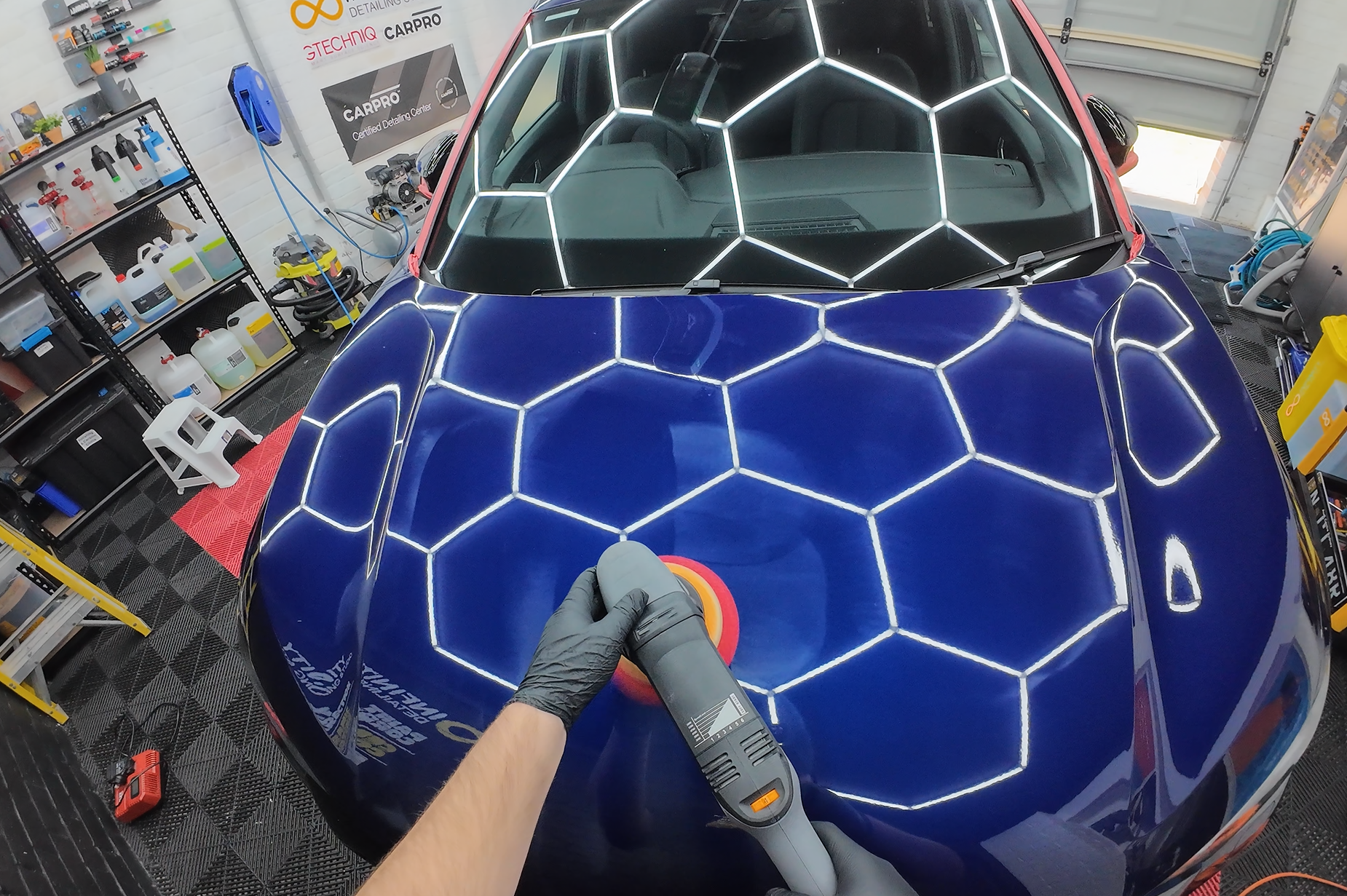
What Is Paint Correction?
Paint correction is a professional process that removes surface-level defects from your vehicle's clear coat using machine polishing. A trained detailer uses a combination of cutting compounds, polish, and finishing pads to level out the surface, eliminating the imperfections that cause your paint to look dull, hazy, or scratched.
It is not the same as a regular car wash or a quick wax. Those products sit on top of your paint and might temporarily hide minor imperfections, but they don't remove them. True paint correction requires skill, the right equipment, and a proper prep process to achieve a result that genuinely transforms your paint.
The Warning Signs to Look For
1. Swirl Marks
Swirl marks are the most common form of paint damage and the most misunderstood. They look like fine circular scratches that appear across the surface of your paint, most visible in direct sunlight or under artificial lighting. They are not caused by one single event. They build up over time from incorrect washing techniques, dirty cloths, automatic car washes with abrasive brushes, and wiping a dry or dusty car with a towel.
If you look at your car under bright light and see what looks like a spider web of fine scratches, swirl marks are already there.
2. Fine Scratches and Scuffs
These are different from deep key scratches or stone chips that go all the way through to the metal. Fine surface scratches sit in the clear coat layer and can often be corrected with polishing. They come from a range of everyday situations, including branches brushing against the car, shopping trolleys, drive-through car washes, and rubbing against the paint without proper lubrication.
Left alone, fine scratches don't disappear. They collect dirt, oxidise at a slightly faster rate than the surrounding paint, and become more visible over time.
3. Dull or Flat-Looking Paint
Your car's paint should have depth and gloss. If it looks flat, chalky, or lifeless, that is oxidation. The clear coat is breaking down from prolonged UV exposure, heat cycles, and environmental contamination. This is especially common on darker vehicles and on horizontal surfaces like the bonnet and roof that cop the most direct sun.
Mild to moderate oxidation can be addressed through paint correction. Severe oxidation that has eaten through the clear coat entirely is a different issue that may require respray on the affected panels.
4. Water Spots
Water spots happen when water evaporates and leaves behind minerals and contaminants on the surface. In Sydney, where water quality varies and most people wash their car in direct sunlight or let it air dry, water spots are extremely common.
Minor water spots can sometimes be removed through decontamination alone. But if they have etched into the clear coat from sitting under the sun repeatedly, light to medium polishing is required to bring the surface back. Ignoring them means the etching deepens over time.
5. Paint That Feels Rough or Gritty
Run your hand across your car's paint after washing. It should feel smooth and clean. If it feels rough, gritty, or like sandpaper, your paint is contaminated. Fallout from iron particles, industrial dust, brake dust, and road tar bond to the clear coat and sit below the surface where a regular wash cannot remove them.
Contamination is always addressed before polishing. Without decontamination, you risk grinding particles into the paint during correction and creating more damage than you started with. This is part of why proper preparation matters so much when it comes to any professional detailing work.
Why Waiting Makes It Worse
Paint defects don't stay the same. Every week a swirl mark is left untreated is another week of UV exposure, water sitting in the scratch, and oxidation accelerating around the damaged area. What might have been a one-stage polish job can turn into a more aggressive two or three-stage correction if left long enough.
There is also a finite number of times paint can be corrected. Each polishing session removes a thin layer of clear coat. A car with well-maintained paint that gets corrected conservatively every few years has plenty of clear coat remaining. A car that has been neglected and requires aggressive cutting to remove heavy damage loses significantly more material in a single session.
The earlier you address paint damage, the more options you have and the less material needs to be removed.
What Happens During a Paint Correction at Infinity Detailing Studio
Every paint correction at our Prestons studio starts with a full inspection under professional lighting. We assess the depth and severity of the defects before recommending the right level of correction for your vehicle.
From there, the car goes through a thorough wash and decontamination process, which includes iron fallout removal and clay bar treatment. Only once the paint is fully clean and contamination-free do we begin machine polishing.
Depending on the condition of your paint, we may recommend a one-stage or multi-stage correction. The goal is always to remove as much of the defect as possible while preserving as much clear coat as we can. The result is paint that is dramatically cleaner, glossier, and more reflective than when it came in.
Following correction, we can apply a ceramic coating or other protective layer to lock in the results and keep the paint protected going forward. You can read more about our full exterior car detailing services to understand everything involved.
How to Protect Your Paint After Correction
Once your paint has been corrected, protecting it properly is the most important thing you can do. A proper maintenance routine, including a wash method that doesn't introduce new swirl marks, goes a long way.
Our maintenance detailing service is designed specifically to keep freshly corrected or coated vehicles in excellent condition between major details. Regular maintenance removes the contamination that builds up over time before it has a chance to cause damage.
Book a Paint Assessment in Prestons
Not sure whether your car needs paint correction? Book an assessment with our team in Prestons. We'll inspect your paint under proper lighting, tell you exactly what we're seeing, and recommend the best course of action for your vehicle without overselling you on work that isn't needed.
Get in touch with us to book your inspection or ask any questions about our paint correction process.